


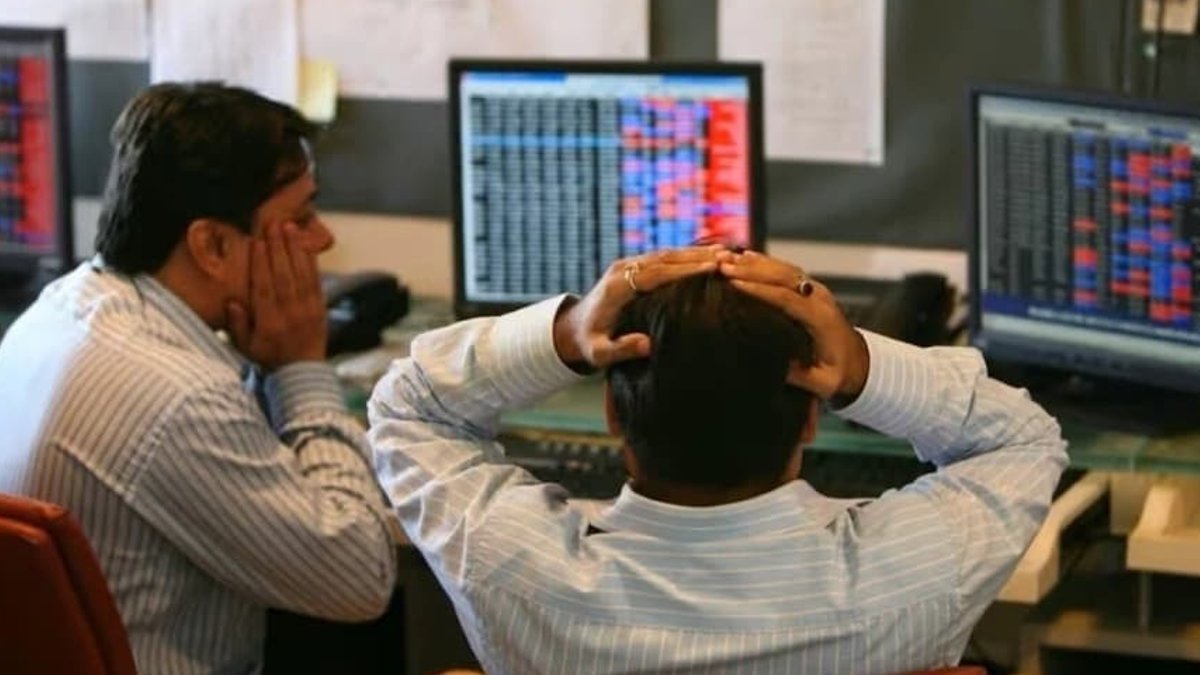
India’s benchmark equity indices reached six-month lows on Tuesday as broader Asian markets declined under multiple pressures. The BSE Sensex fell 629 points, or 0.86%, to 72,151, while the NSE Nifty dropped 194 points, or 0.85%, to 22,582.40—the lowest levels since March. The downturn extended across the region, with Japan’s Nikkei down 1.37%, South Korea’s Kospi off 0.96%, and Taiwan’s Taiex lower by 0.77%. Among the 3,880 actively traded stocks on the BSE, 2,655 declined, and 190 hit their 52-week lows within 90 minutes of trading. By midday, the combined market value loss for listed companies totaled ₹4.38 lakh crore.
The India VIX surged 5.53% to 14.39, indicating heightened uncertainty. Analysts cited a worsening global macro environment, with Brent crude oil at $107.27 per barrel, a 1.89% increase, and the US 10-year bond yield steady at 5.25%. V K Vijayakumar, chief investment strategist at Geojit Investments, stated that the US now faces “high growth and high inflation,” a combination that typically reduces risk appetite.
Oil prices drove much of the pressure, following the US rejection of an Iran peace deal. Crude prices climbed above $107 over two days, intensifying inflationary concerns. Higher energy costs squeeze corporate margins and increase borrowing expenses, further pressuring stocks. A stronger US dollar compounded the downturn, with the Dollar Index rising to 101.28, its highest level in months. The greenback’s strength makes emerging market assets less appealing, especially with persistent capital outflows.
Provisional data showed foreign portfolio investors sold ₹5,353.22 crore in Indian equities on Monday alone. Since September, they have sold ₹20,695 crore worth of shares, reversing earlier inflows of ₹29,631 crore in August and ₹20,200 crore in July. Cumulative outflows for 2026 stand at ₹2,45,136 crore, raising liquidity concerns.
Rising bond yields added to the pressure, with India’s 10-year government bond yield reaching 7.16%. The shift makes fixed-income investments more attractive, diverting capital from equities. Hemang Gor, a senior research analyst at Axis Direct, noted that September’s quarter-end rebalancing often amplifies volatility in Indian markets, particularly when aligned with global yield spikes.
Nomura highlighted that the Reserve Bank of India’s monetary policy is at an inflection point. Markets are pricing close to 125 basis points of rate hikes over the next one year.
Among Sensex constituents, 27 of 30 stocks declined, with HCL Tech, Bajaj Finance, Titan, Infosys, and Maruti Suzuki each dropping up to 2%.


