


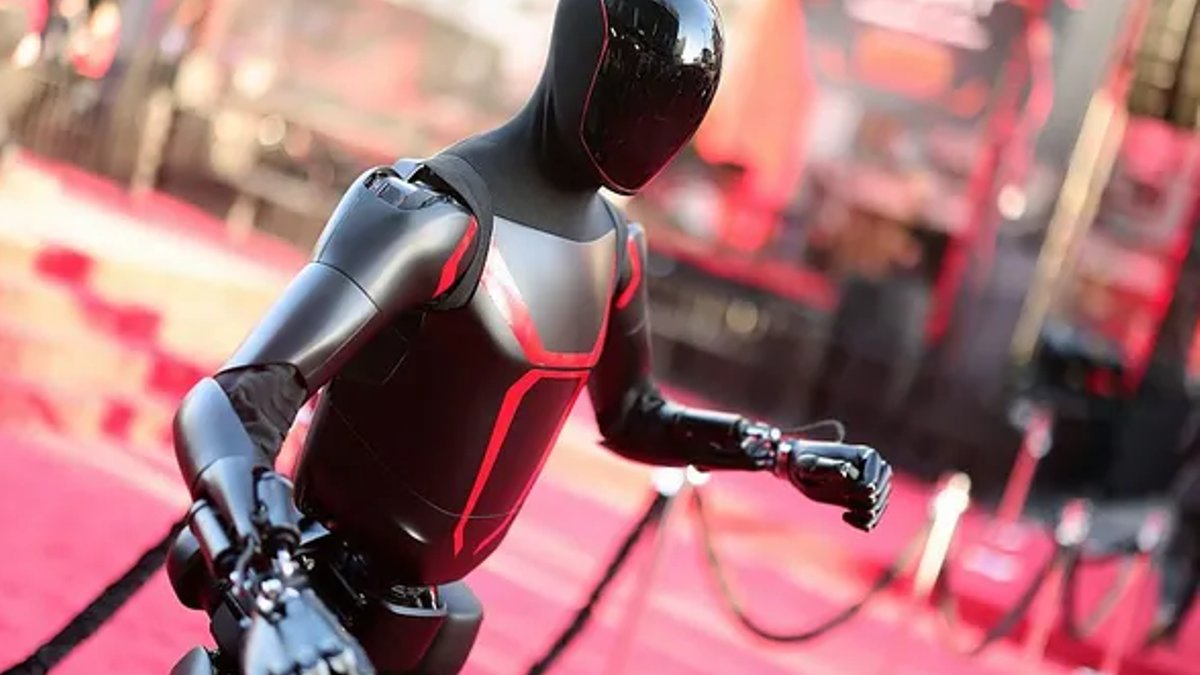
Tesla has begun early production of its Optimus humanoid robot at its Fremont, California facility, with plans to start customer shipments next year. CEO Elon Musk shared this update during a recent earnings call.
Industrial Focus First, Home Use Later
Musk stated that initial customers will use Optimus for industrial tasks, particularly those that are dangerous or repetitive. However, Tesla envisions a future where individuals can purchase these robots for home use as production scales.
The Fremont facility now houses the majority of a robotics production line capable of manufacturing 1 million units annually. Musk noted it could take a year or more to reach full capacity as Tesla refines its production processes.
Competitors Enter the Race
Tesla’s move comes as competitors like Toyota and Hyundai also advance their humanoid robot initiatives. Toyota plans to deploy 400,000 robots as part of a $6.4 billion annual investment to automate its assembly lines. Hyundai’s Boston Trends recently opened a robotics center in Georgia to test and train its Atlas humanoids for automotive factory use.
Read Also: Kroger expands RFID and AI to boost inventory
One challenge for these companies is gathering data to train autonomous robots for real-world tasks. Unlike its self-driving cars, Tesla lacks a large dataset for Optimus. Musk explained that Tesla will address this by creating an Optimus Academy with 10,000 to 20,000 robots to practice various tasks, using the data to improve the robot’s capabilities.
Elon Musk compared the robot’s progress to a toddler’s development, noting early instability and gradual learning.
Technical Advancements and Future Plans
Tesla’s Terafab facility in Texas will supply AI5 chips, its next-generation processors, to enhance Optimus’s computing power. These chips are set to be integrated into the robots by April. Musk expressed confidence in Optimus’s capabilities, stating he would be “stunned” if any competitor’s robot were “remotely competitive” by the time customer deliveries begin next year.
While humanoid robots currently represent a small portion of global robotics sales, the segment is growing rapidly. Manufacturers are increasingly turning to automation to address labor shortages. Last year, nearly 7,000 humanoids were purchased, compared to 603,000 robots across all categories, according to the International Federation of Robotics.


