


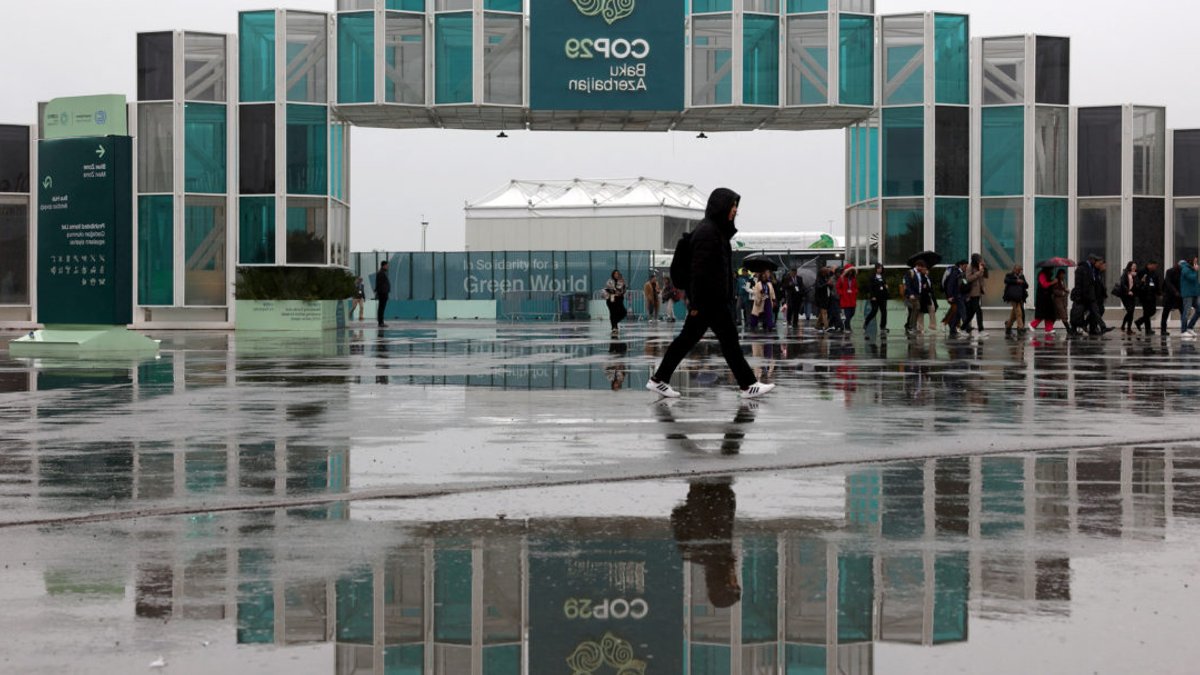
World leaders at COP29 this week are relying on private investors like Rob Drijkoningen to help close a $2 trillion annual funding gap for climate projects in poorer countries. After months of talks with development banks, Drijkoningen abandoned the effort, calling the deals unworkable.
Drijkoningen manages $27 billion in emerging market debt at Neuberger Berman. He said multilateral development banks refuse to share enough risk data or allow investors to select which projects to fund. Without equal access to information, private firms cannot properly assess climate investments in developing nations. “That’s a cultural issue that remains unresolved,” he said.
Promises fall short of reality
Development banks have promised to increase lending to $120 billion a year by 2030 and attract an additional $65 billion annually from private investors. Last year, for every dollar these banks invested globally, they drew just 88 cents in private capital. In poorer countries, the figure dropped to 44 cents—well below the $1.50 to $2 target set by G20 experts.
The European Investment Bank and European Bank for Reconstruction and Development say they are improving transparency, though limits remain. EBRD President Odile Renaud-Basso acknowledged the constraints without specifying what information cannot be shared. An analysis of lending data and interviews with two dozen sources found that reforms are not advancing quickly enough to address the problem.
Guarantees and guarantees
Some development banks are testing new methods to attract private money. The U.S. recently guaranteed $1 billion in loans from the Asian Development Bank, unlocking $4.5 billion for climate projects. The EBRD is exploring similar guarantees for sovereign lending, though details remain unclear. IDB Invest has restructured its operations to increase private capital fivefold since 2019.
Related: Taiwan Firm Invests Heavily in US Chip Plants
Guarantees alone will not resolve deeper issues. Many development banks still compete with private investors for the same deals, unwilling to take a secondary role. Gianpiero Nacci, EBRD’s director for sustainable business, described the shift toward private-sector mobilization as a “work in progress.” New internal targets push teams to prioritize it, but progress varies. The African Development Bank has seen private capital mobilization stagnate or decline in recent years.
Investors cite the lack of detailed risk data as a key obstacle. The OECD found that unclear information leads to mispriced risks, discouraging private investment. While development banks have expanded a shared database called GEMs, some investors argue it still lacks sufficient detail. Erich Cripton of Canadian pension fund CDPQ noted that the data reflects the banks’ preferred creditor status, which does not apply to private lenders. “For us, the risk is higher,” he said.
If reforms do not accelerate, the consequences could be serious. A potential U.S. withdrawal from global climate efforts under a second Trump administration would widen the funding gap. Some investors, like Allianz Global Investors’ Nadia Nikolova, warn that without better data, they cannot meet their fiduciary duty to clients. “If I don’t have that information, I can’t price the risk,” she said.
A few investors are not waiting for change. Africa Investor connects private capital to green infrastructure projects without relying on development banks. CEO Hubert Danso called it a “market failure” that these institutions cannot attract the necessary funds. Somalia’s chief climate negotiator, Abdullahi Khalif, acknowledged the risks but highlighted opportunities in renewable energy and irrigation for those willing to take them. “Only investors ready to accept risk will enter these markets,” he said.
Development banks must act quickly to turn promises into results, or private investors will continue to withdraw.


