


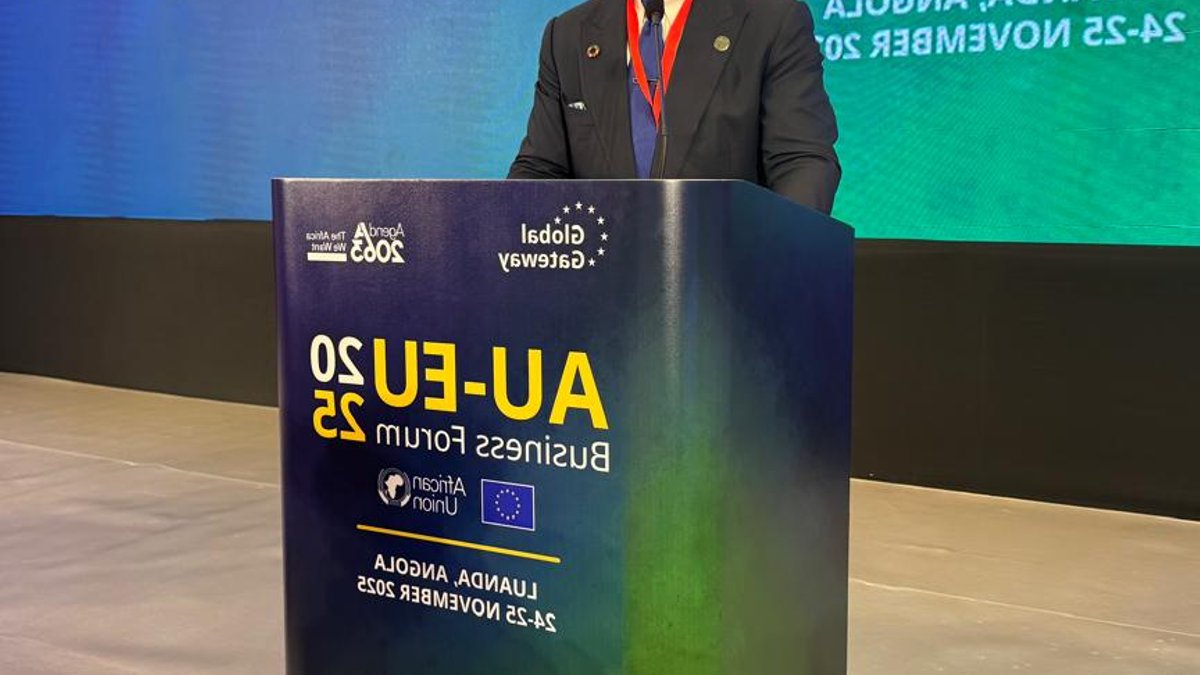
Africa Investor (Ai) is pressing the European Union to lower capital costs and mobilize institutional investors for a shared green-industrial future, using the recent AU-EU Heads of State Business Summit in Luanda as a stage for the proposal. Dr. Hubert Danso, the group’s Chairman and CEO, represented the continent’s pension, insurance, and sovereign investment community at the event, arguing that a reset in capital flows is necessary to unlock growth.
Resetting Capital Flows
Dr. Danso called for a decisive shift in how Europe and Africa approach investment. He urged EU leaders to direct the EBRD and EIB to lead within the GEMS Consortium. The goal is to implement the G20 GEMs2.0 Directive. This would help democratize sovereign-risk data for investors and rating agencies, while also working with investor-led GEMs3.0 sandbox programs.
The current lack of transparent, standardized data in emerging markets is costing money. Dr. Danso highlighted two specific losses: African and emerging economies lose $15.6 billion annually to excess interest and foregone investment. Additionally, European and global pension funds, insurers, and sovereign wealth funds lose between $4 trillion and $6 trillion in long-term returns.
Related: G20 Leaders Highlight Cultural IP for African Growth
“We must stop trying to make investment developmental — and start making development investable,” Dr. Danso stated. He wants coordinated co-investment policy to crowd in European institutional capital at scale. He also suggested that the EU’s Global Gateway initiative, when aligned with GreenAlpha’s IIPP architecture, could serve as a strategic engine to accelerate mobilization.
Mobilizing European Capital
Dr. Danso emphasized that Europe’s institutional investors manage approximately €30 trillion in assets under management (AUM). Aligning this capital with GreenAlpha’s Institutional Investor–Public Partnership (IIPP) platforms offers major mutual gains. For Africa, this means secure access to critical minerals, expanded green-technology manufacturing, and better supply-chain resilience.
European universal owners and industrial offtakers stand to benefit directly. As Africa grows its participation in the $10 trillion-a-year global green-industrial economy, countries can offer competitively priced hydrogen, battery materials, and e-fuels. This improves job creation across both continents and strengthens industry competitiveness through reduced risk premiums.
The argument rests on the idea that African asset owners are already leading the charge. They are building the frameworks and platforms necessary to align domestic and global investors with African governments behind a shared green-industrial transformation. The backbone of this cooperation is the African Union’s 5% Asset Allocation Agenda, GreenAlpha, and the African Green Infrastructure Investment Bank (AfGIIB).
Related: Mastering the World of Business: A Comprehensive Guide
Green Industrial Cities and Corridors
Africa Investor has established GreenAlpha to make African green-industrial infrastructure a globally competitive, investable asset class. The model provides Basel-aligned, consultant-validated, long-duration portfolio architecture suitable for pensions and insurers. It seeks to establish for Africa what Canada and Australia built for their own economies: a dedicated infrastructure asset class.
The focus is on Green-Industrial Cities and corridor opportunities. These include logistics and industrial corridors. At the summit, Dr. Danso advanced EU participation in priority GIC corridors. He engaged EU delegations, DFIs, the African Union, and multinational CEOs on structured partnership opportunities.
A unified Institutional Investor–Public Partnership (IIPP) model remains the stated goal. This approach brings global asset owners, African governments, DFIs, and industry partners together. They co-create the enabling policies, governance systems, and bankable offtakes required to mobilize private capital at scale.


